

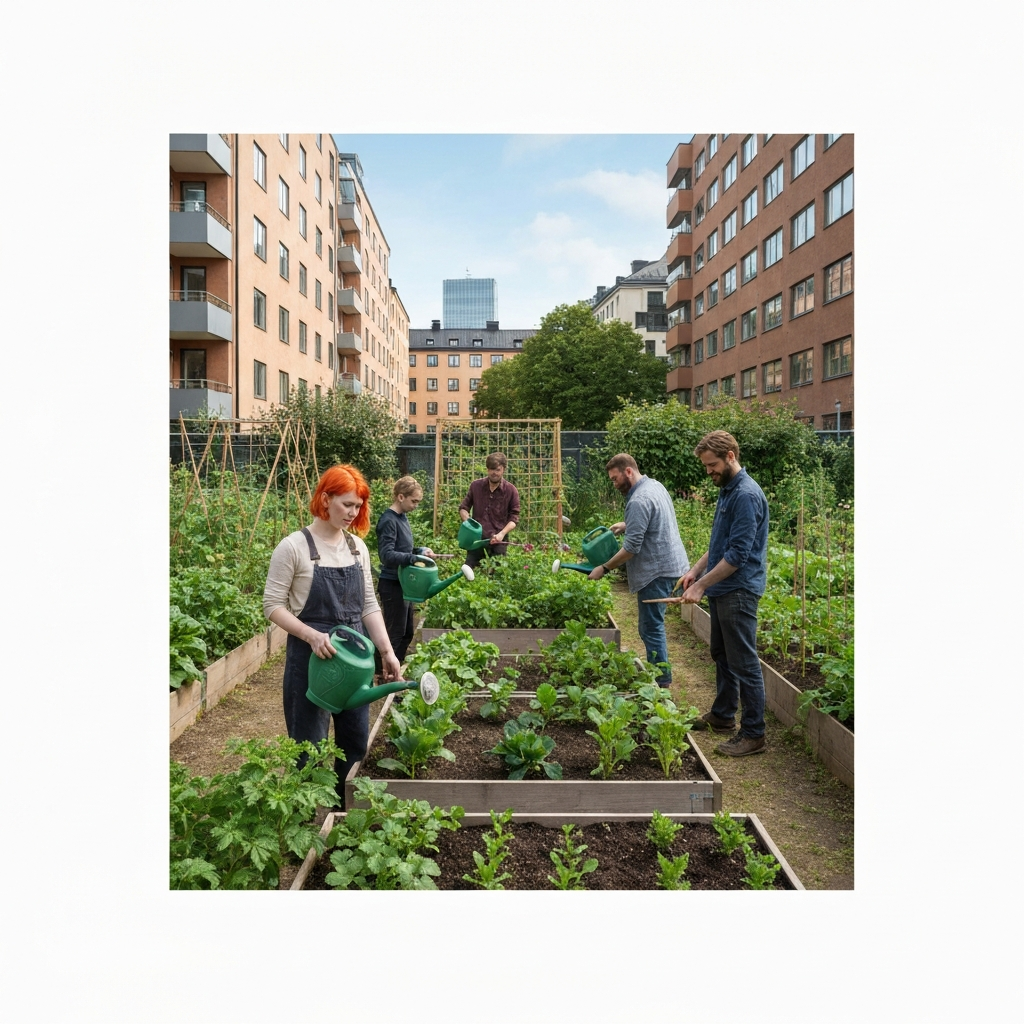
In recent years, Stockholm has witnessed a burgeoning interest in urban gardening, with residents transforming underutilized spaces into vibrant community gardens. This movement not only beautifies the city but also fosters social cohesion and promotes sustainable living.
The Emergence of Community Gardens
One notable example is ‘Trädgård på spåret’ (Garden on the Track), established in 2012 on an abandoned railway track in Södermalm. This initiative has evolved into a communal space where locals cultivate vegetables, share knowledge, and strengthen community bonds. The garden also serves as an educational platform, with dedicated areas for preschools to teach children about nature and food sources. [Source]
Municipal Support and Challenges
The Stockholm municipality has recognized the value of urban agriculture in enhancing food security and promoting sustainability. However, challenges such as limited access to suitable land, fragmented regulations, and financial barriers persist. To address these issues, Stockholm is participating in the international ‘Just Grow’ project, aiming to develop tools that help cities measure the environmental and social impacts of urban agriculture. [Source]
Social Benefits and Community Engagement
Beyond environmental advantages, community gardens in Stockholm offer significant social benefits. They provide spaces for residents to connect, share experiences, and collaborate on sustainable practices. Initiatives like ‘Folkodlarna’ in Skarpnäck emphasize the importance of social interaction and mutual learning, creating inclusive environments that cater to diverse groups. [Source]
Looking Ahead
As urban gardening continues to flourish in Stockholm, it represents a collective effort towards a greener, more connected city. By overcoming existing challenges and fostering community engagement, these initiatives have the potential to transform urban spaces into thriving hubs of sustainability and social interaction.