

By Lukas Berg
The United States is in a moment of tension between promising economic signs and deep political divisions. These overlapping trends—labor market strength, persistent inequality, and rising polarization—are defining national headlines and shaping daily life. Here’s a breakdown of where things stand.
1. Labor Market Shows Surprising Strength
August saw the U.S. add 162,000 new jobs—much more than economists expected—pointing to resilience despite inflation and uncertainty. Employers and policymakers are closely watching whether this momentum can last and what it means for Federal Reserve decisions on interest rates.
At the same time, job openings remain high, with about 7.3 million vacancies. Layoffs are relatively low, signaling a still-tight labor market. For workers and job seekers, that means better choices and more leverage—but inflation also remains a weight on earnings and purchasing power.
2. Income and Inequality: Progress and Disparity
Median household income edged up slightly, with Asian and Hispanic households seeing gains. But income for Black households slipped, and gains for White or non-Hispanic White households were minimal or unchanged. The overall income inequality, as measured by the Gini index, declined only marginally—suggesting a status quo rather than wide equality. Meanwhile, at the top tiers, earnings continue to pull ahead. Women working full time continue to earn less than men, and the gap seems to be widening again.
On wealth, the top 1% still hold a large share—though recent housing market gains have helped middle-class homeowners to build more equity. For younger generations, accumulating wealth remains harder than for older groups at similar life stages. And households headed by single parents are particularly vulnerable financially.
3. Polarization at Both Ends—Ideological and Social
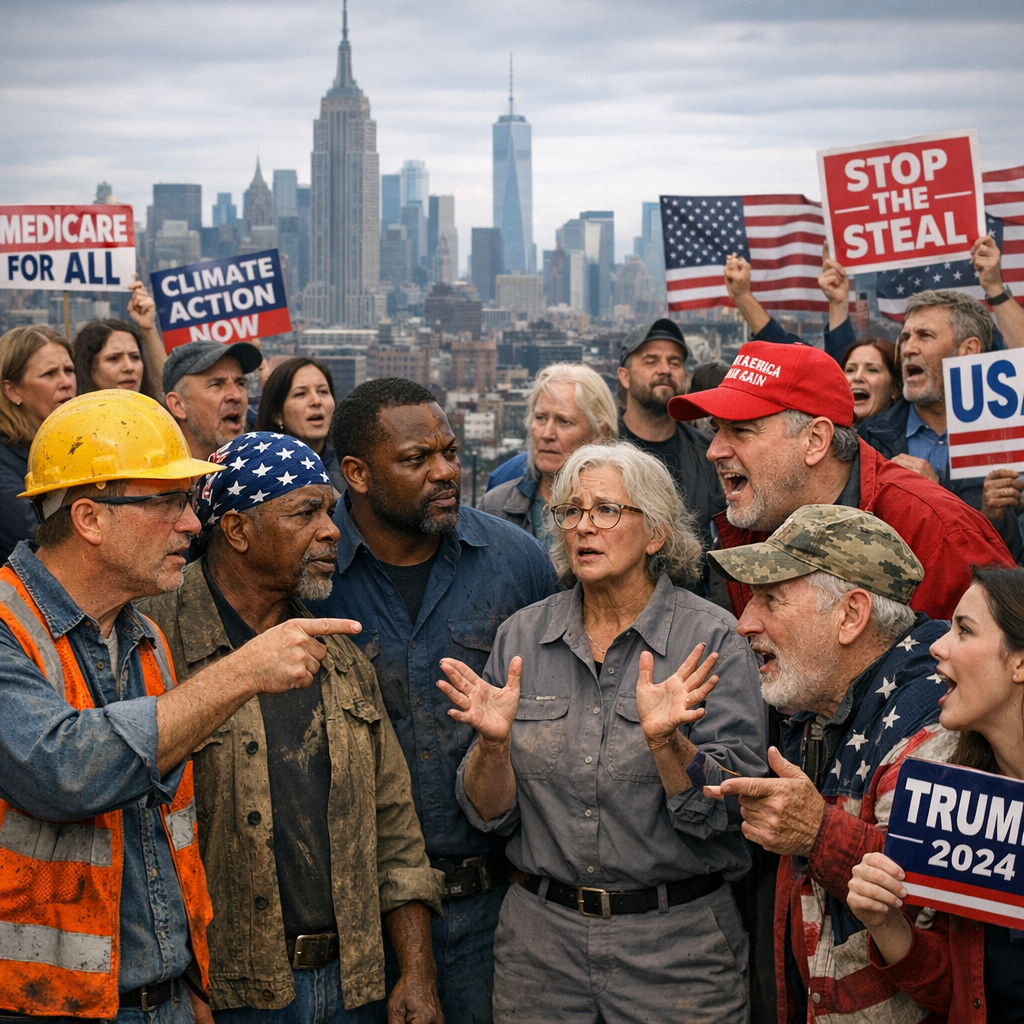
Political polarization in the U.S. is high. Ideological splits—on tax policy, climate, race, and immigration—are matched by what social scientists call “affective polarization,” where people from opposing parties dislike each other intensely. Frustration is growing not just with the other side, but with one’s own party, especially among those who feel more moderate.
This division shows in public trust in institutions, divided media consumption, and gridlock in Congress. Governing becomes harder when cooperation feels like compromise on fundamentals, and many citizens worry about elections, civic fairness, and long-term stability.
4. What to Watch Moving Forward
- Inflation vs. wage growth: If wages can keep up with inflation, economic anxiety may ease; if not, living costs will continue to dominate how many Americans feel about politics and policy.
- Political reform: Issues like gerrymandering, primaries, voting rights, and campaign finance may be key battlegrounds for those aiming to reduce polarization.
- Generational and racial equity: Policies and market trends that address gaps in wealth and income between racial groups, family structures, and generations could reshape long-term opportunity.
The themes linking labor, inequality, and politics suggest that America is balancing on fragile ground. Economic indicators point toward stability, but not shared prosperity. Political divisions offer no easy solutions. Understanding where things are—and where they might be headed—can help U.S. observers in Stockholm and beyond keep watch on this central story of our time.