

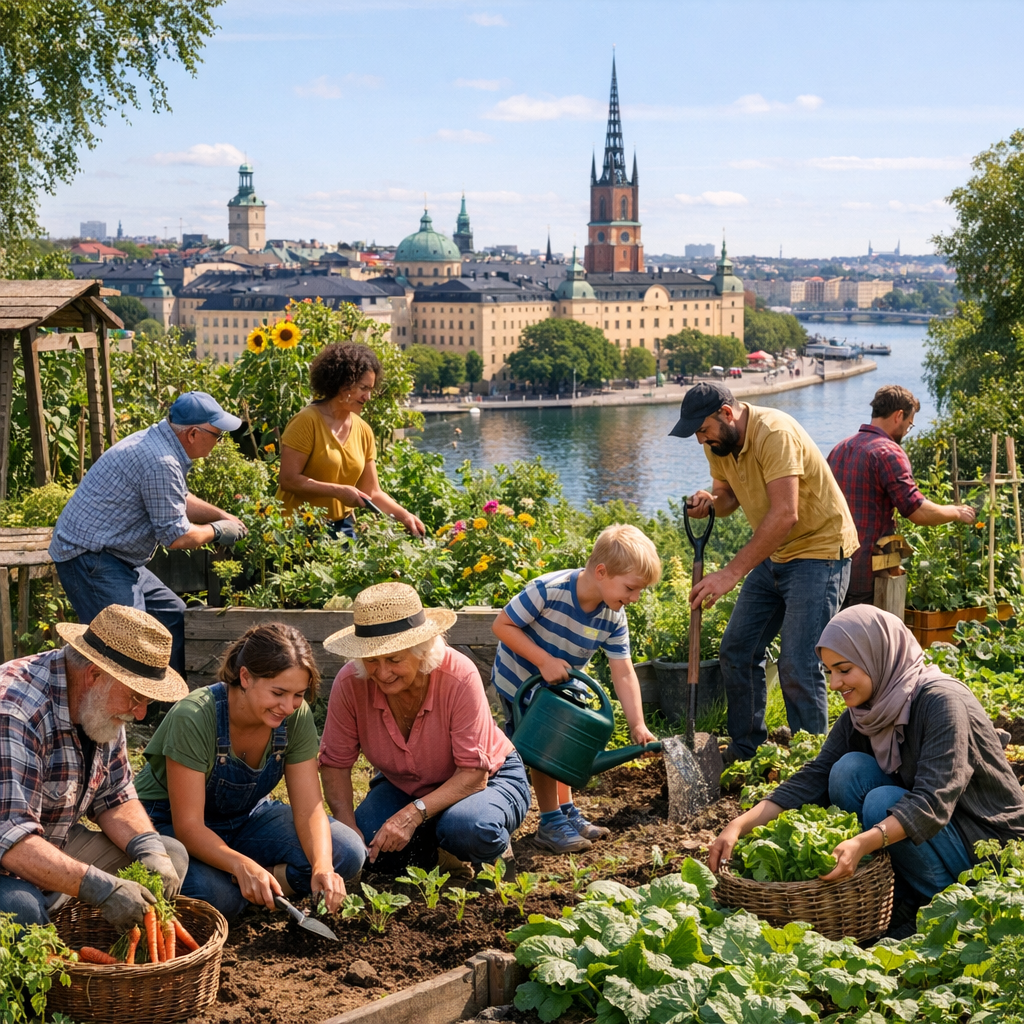
In recent years, Stockholm has witnessed a burgeoning interest in urban gardening, with residents transforming city spaces into verdant communal hubs. This movement not only enhances the city’s green landscape but also fosters community engagement and promotes sustainable living.
Community-Led Initiatives
Several grassroots organizations have been instrumental in this transformation. Odla Ihop operates multiple communal gardens across Stockholm, including locations in Tantolunden, Aspudden, Västberga, and Öråkers gård in Kungsängen. These gardens serve as platforms for residents to cultivate vegetables and establish forest gardens using regenerative, permaculture methods. Membership is open to all, encouraging a diverse group of participants to engage in sustainable agriculture.
Similarly, Frihamnstorget has developed a co-created container village in the old harbor area of Frihamnen. This space hosts studios, cafés, workshops, and galleries, and during the summer, it transforms into an open-air venue featuring circus performances, concerts, and art exhibitions. The community also emphasizes urban farming, with ongoing projects aimed at creating sustainable green spaces within the city.
Innovative Urban Farming Projects
Stockholm’s urban agriculture scene is also marked by innovative projects that utilize unconventional spaces. In Högdalen, an underground cargo area beneath a shopping center has been converted into a high-tech farming space. This initiative aims to create a small-scale industry and provide local job opportunities, demonstrating the potential of urban agriculture to revitalize underutilized urban areas.
Challenges and Opportunities
Despite the enthusiasm, urban gardening in Stockholm faces challenges. Competing interests over valuable land and the energy-intensive nature of some urban farming methods pose significant hurdles. Additionally, ensuring that these initiatives reach and benefit all segments of the population remains a concern. Researchers emphasize the need for sustainable practices that deliver long-term benefits and advocate for policies that support the resilience and inclusivity of urban agriculture projects.
Looking Ahead
The future of urban gardening in Stockholm appears promising. With continued support from both the community and policymakers, these green initiatives have the potential to further transform the city’s landscape, promote environmental sustainability, and strengthen community bonds. As more residents engage in urban gardening, Stockholm moves closer to becoming a model city for sustainable urban living.