

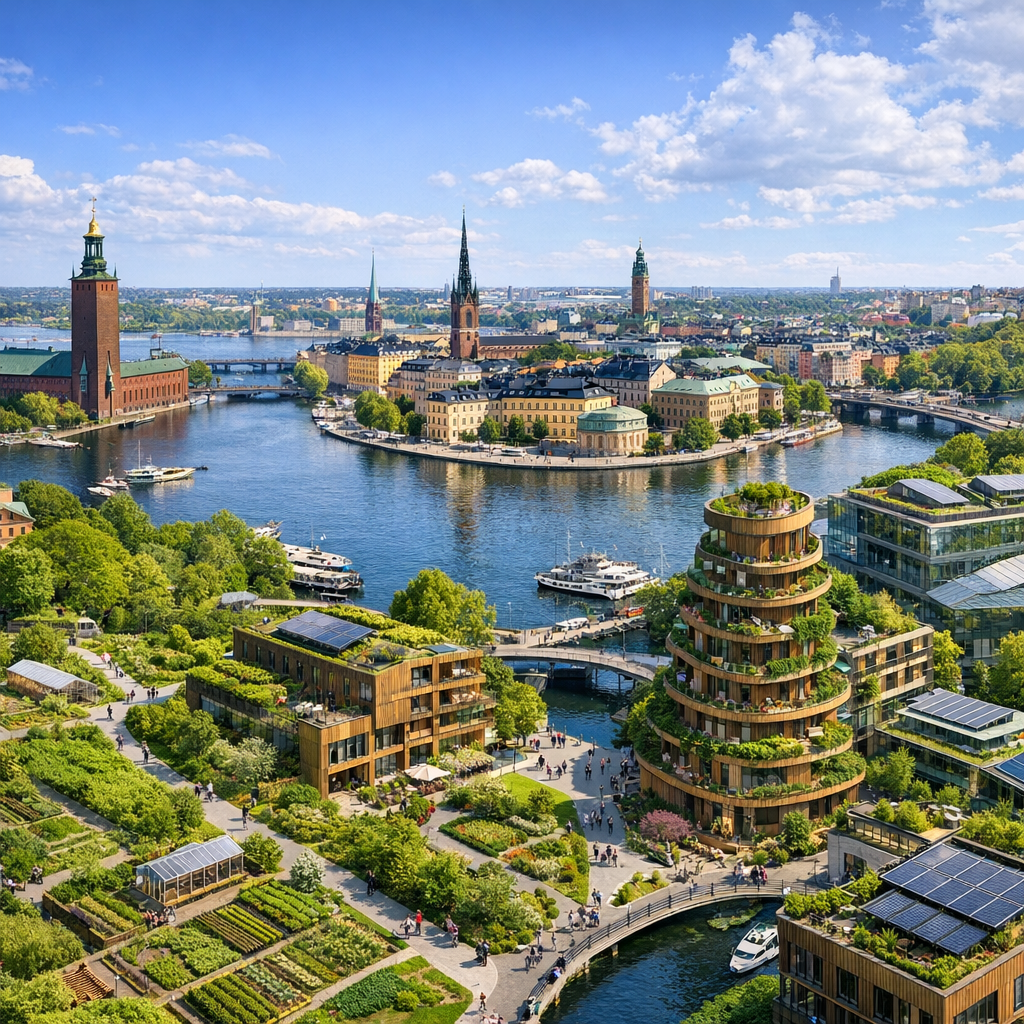
Stockholm has long been recognized as a leader in environmental sustainability. In 2010, it became the first city to receive the European Green Capital Award, acknowledging its extensive efforts in creating a greener urban environment. This accolade was a testament to the city’s commitment to integrating economic growth with environmental responsibility.
Building on this foundation, Stockholm unveiled its Climate Action Plan 2030, outlining concrete measures to transition away from fossil fuels. The plan emphasizes a just and inclusive transition, ensuring that all residents benefit from sustainable initiatives. Key focus areas include developing a climate-positive energy system, promoting sustainable transportation, and encouraging consumption with a low climate impact.
One of the ambitious goals set forth is for Stockholm to be completely fossil-free by 2040. This involves reducing emissions from energy use and transport by 80% by 2030 and halving consumption-based emissions by the same year. To achieve these targets, the city is implementing approximately 150 concrete measures, continuously evolving as new opportunities arise.
Residents play a crucial role in this transition. The city encourages sustainable living practices, such as reducing meat consumption, sharing and reusing goods, and traveling eco-friendly. By making conscious choices, Stockholmers contribute significantly to the city’s environmental goals.
Furthermore, the city is investing in sustainable urban development. The Action Plan for Sustainable Urban Development in the Stockholm Region aims to strengthen the capacity to include innovation in planning processes, improve conditions for testing sustainable solutions, and create opportunities for small and medium-sized enterprises to commercialize innovative products.
Stockholm’s comprehensive approach to environmental sustainability serves as a model for cities worldwide, demonstrating that economic growth and environmental responsibility can go hand in hand.