

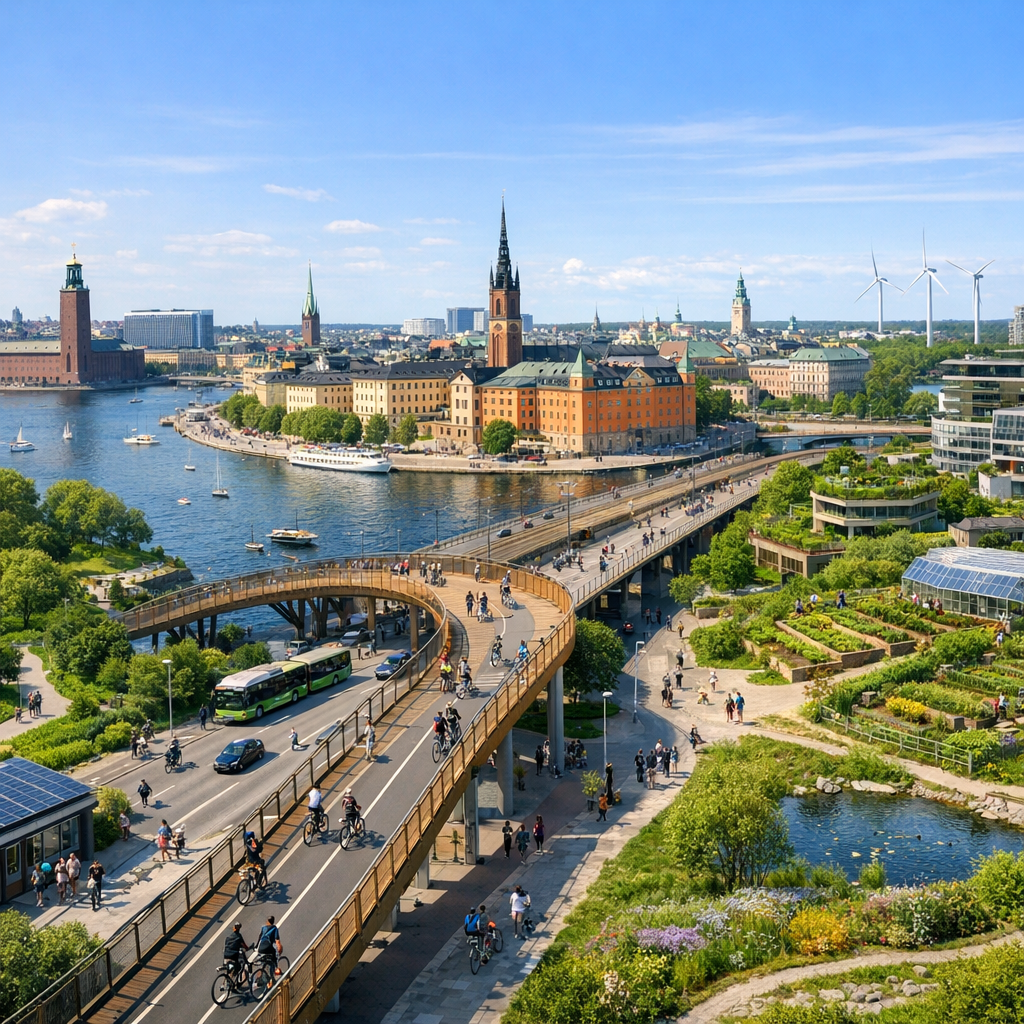
Stockholm has long been recognized as a leader in environmental sustainability. In 2010, it became the first city to receive the European Green Capital Award, acknowledging its comprehensive efforts to create a greener urban environment. This accolade was a testament to the city’s commitment to integrating economic growth with environmental responsibility.
Ambitious Climate Goals
In recent years, Stockholm has intensified its environmental initiatives. The city’s Environment Programme 2030 outlines seven priority goals, including achieving a fossil-free Stockholm by 2040 and reducing emissions from consumption by 50%. These objectives are part of a broader strategy to ensure a just and inclusive transition towards sustainability.
Innovative Projects and Collaborations
To support these goals, Stockholm has launched several innovative projects. The STOLT (Stockholm Local Transitions) initiative aims to contribute to efficient and emission-free transportation in the city. This project focuses on reducing car travel, electrifying transportation, and creating a more attractive urban environment. Additionally, the city collaborates with businesses and organizations through the Environment and Climate Pact, a joint effort to reduce negative climate impacts.
Encouraging Sustainable Living
Stockholm also emphasizes the role of its residents in achieving environmental goals. The city provides resources and information to help citizens make climate-smart choices in their daily lives, such as promoting recycling, reducing food waste, and encouraging the use of public transport and bicycles.
Looking Ahead
As Stockholm continues to implement its comprehensive environmental strategies, it sets a global example of how urban areas can effectively address climate change. The city’s commitment to sustainability not only enhances the quality of life for its residents but also contributes to the global effort to combat environmental challenges.